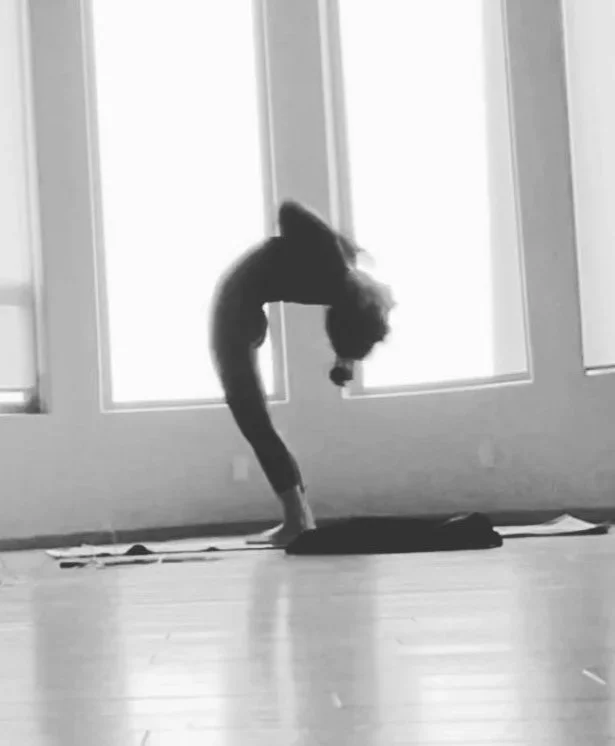
Online Mysore Ashtanga Yoga
6 week cycle starting September 4, 2026
Private group Mysore practice online.
New students welcome.
Classes meet Fridays at 10am New Orleans time.
Intentionally small and personal, 8 student maximum.
Dates:
Sep 4
Sep 11 no class, moon day
Sep 18
Sep 25
Oct 2
Oct 9
Oct 16
How to Join class:
$130 for 6 week cycle. Payment through PayPal or Venmo reserves your spot. Please DM on IG or email with your practice history so I know how to support you. See you in class!
FAQs
Q: I haven't been practicing... With the holidays, and work, and life, and the cold weather I just stopped. Now I dread coming back because I think it will be too hard and also I am a little embarrassed and disappointed in myself. Should I come back?
A: Yes, of course you should come back to practice! Practice is effort toward steadiness of mind. Don't worry about completing some acrobatic feat. What is really interesting, really what it is about is just showing up. So okay, you got a little distracted. You can have a fresh start tomorrow. In terms of asanas, just start small and slowly do a little bit more each day, couple of days, weeks, or even months. It depends on how long you took off... No matter. It will probably take some time for things to feel natural again and to get into the daily rhythm and that is okay. While time off is not recommended, the good thing about it is that when you start practicing again you'll quickly realize why you missed it so much and it will probably be more difficult to let it go again when life gets stressful. No fearing, you come!
Should I practice if...
I'm sick?
Yes, practice at home. You don't want to get anyone else sick. Just do what you can.
If you have a fever, just rest.
I'm injured?
Yes. Talk with your teacher, they'll be able to give you specific instruction on what to do and how to proceed. Practice is effort toward steadiness of mind. It really isn't about the asanas. Your asana practice might be a bit different when you are working with an injury. That is really totally ok.
I'm menstruating?
Traditionally, no. Rest during your first three days of menstruation. There are some pretty compelling reasons for this. And also - it’s no one’s business but your own. You know your body best. Do what feels right for you and everyone will embrace and respect your decisions.
I'm pregnant?
Maybe. Talk with your teacher in person.
I'm feeling sad/tired/scared/angry/upset/happy/etc.?
Yes. See "effort toward steadiness of mind".
I'm sore?
Yes. Let your teacher know.
It is a moon day?
No. Just rest.
I missed days and dread what will happen?
Yes. Just show up and see what happens. No fear.
I don't like it/am not comfortable?
Yes. It is okay to feel confused, emotional, uncomfortable, etc. If you trust your teacher and have faith in the practice, it will pass. If you don't trust your teacher and don't have faith in the practice, find a new teacher and maybe a new practice. You should feel safe, respected, and like you are growing. Feeling raw and challenged and healing — that’s totally different than feeling unsafe etc. That’s never ok.
I'm hungover/constipated/hungry/ate something right before?
Yes. Just show up and see what happens. That is how we learn.
Right, so yoga is the cessation of the thinking mind so that one can see the true nature of the self. Practice is effort toward steadiness of mind. It all starts to come together through consistent, dedicated, uninterrupted practice, done over a LONG period of time. So really, you are practicing 24/7. The asana bit, the ritual where you show up to work on the tristhana happens "every day". Monday, Tuesday, Wednesday, Thursday, Friday and then rest on either Saturday or Sunday and moon days. This system works pretty well because some days you'll be like "Yay yoga!" and it will be easy to show up and other days you'll be like "Snooze!" If you have designated rest days, then when the mind starts setting up obstacles, you can say "that's cool, we'll rest on Saturday, today I'm going to practice no matter what!" And then when you hit snooze anyway, show up the next day for sure. And then when it happens again and again and you think you can't go back, let the feelings go. Turn that passion toward getting back tomorrow.
Get interested in what can't really be seen, the inside stuff. Try to figure out this steady mind thing. Let go of the asanas.
What about #metoo, abuse and the things I have heard or read about Pattabhi Jois?
We cannot fix the past. A yoga class should be safe and free from any kind of abusive or sexual behavior. It is never ok.
Traditional Practice
Ashtanga Yoga is an ancient system of Yoga that was taught by Vamana Rishi in the Yoga Korunta. This text was imparted to Sri T. Krishnamacharya in the early 1900’s by his Guru Rama Mohan Brahmachari, and was later passed down to Pattabhi Jois during the duration of his studies with Krishnamacharya, beginning in 1927. Pattabhi Jois passed the tradition down to his children and grandchildren. His grandson, Sharath Jois, now teaches at the Sharath Yoga Centre in Mysore, India.
The following are aspects that Pattabhi Jois emphasizes as the main components of Ashtanga Yoga.
Vinyasa:
Vinyasa means breathing and movement system. For each movement, there is one breath. For example, in Surya Namskar there are nine vinyasas. The first vinyasa is inhaling while raising your arms over your head, and putting your hands together; the second is exhaling while bending forward, placing your hands next to your feet, etc.
In this way all asanas are assigned a certain number of vinyasas.
The purpose of vinyasa is for internal cleansing. Breathing and moving together while performing asanasmakes the blood hot, or as Pattabhi Jois says, boils the blood. Thick blood is dirty and causes disease in the body. The heat created from yoga cleans the blood and makes it thin, so that it may circulate freely. The combination of the asanas with movement and breath make the blood circulate freely around all the joints, taking away body pains. When there is a lack of circulation, pain occurs. The heated blood also moves through all the internal organs removing impurities and disease, which are brought out of the body by the sweat that occurs during practice.
Sweat is an important by product of vinyasa, because it is only through sweat that disease leaves the body and purification occurs. In the same way that gold is melted in a pot to remove its impurities, by the virtue of the dirt rising to the surface as the gold boils, and the dirt then being removed, yoga boils the blood and brings all our toxins to the surface, which are removed through sweat. If the method of vinyasa is followed, the body becomes healthy and strong, and pure like gold.
After the body is purified, it is possible to purify the nervous system, and then the sense organs. These first steps are very difficult and require many years of practice. The sense organs are always looking outside, and the body is always giving into laziness. However, through determination and diligent practice, these can be controlled. After this is accomplished, mind control comes automatically. Vinyasa creates the foundation for this to occur.
Tristhana:
This means the three places of attention or action: posture, breathing system and looking place. These three are very important for yoga practice, and cover three levels of purification: the body, nervous system and mind. They are always performed in conjunction with each other.
Asanas purify, strengthen and give flexibility to the body.
Breathing is rechaka and puraka, that means inhale and exhale. Both the inhale and exhale should be steady and even, the length of the inhale should be the same length as the exhale. Breathing in this manner purifies the nervous system.
Dristhi is the place where you look while in the asana. There are nine dristhis: the nose, between the eyebrows, navel, thumb, hands, feet, up, right side and left side. Dristhi purifies and stabilizes the functioning of the mind.
For cleaning the body internally two factors are necessary, air and fire. The place of fire in our bodies is four inches below the navel. This is the standing place of our life force. In order for fire to burn, air is necessary, hence the necessity of the breath. If you stoke a fire with a blower, evenness is required so that the flame is not smothered out, or blown out of control.
The same method stands for the breath. Long even breaths will strengthen our internal fire, increasing heat in the body which in turn heats the blood for physical purification, and burns away impurities in the nervous system as well. Long even breathing increases the internal fire and strengthens the nervous system in a controlled manner and at an even pace. When this fire is strengthened, our digestion, health and life span all increase. Uneven inhalation and exhalation, or breathing too rapidly, will imbalance the beating of the heart, throwing off both the physical body and autonomic nervous system.
An important component of the breathing system is mula and uddiyana bandha. These are the anal and lower abdominal locks which seal in energy, give lightness, strength and health to the body, and help to build a strong internal fire. Without bandhas, breathing will not be correct, and the asanas will give no benefit. When mula bandha is perfect, mind control is automatic.
The six poisons:
A vital aspect of internal purification that Pattabhi Jois teaches relates to the six poisons that surround the spiritual heart. In the yoga shastra it is said that God dwells in our heart in the form of light, but this light is covered by six poisons: kama, krodha, moha, lobha, matsarya, and mada. These are desire, anger, delusion, greed, envy and sloth. When yoga practice is sustained with great diligence and dedication over a long period of time, the heat generated from it burns away these poisons, and the light of our inner nature shines forth.
This forms the practical and philosophic basis of Ashtanga Yoga as taught by Sri K. Pattabhi Jois.
Source: https://sharathyogacentre.com/
Adapted from the old AYRI/KPJAYI website